Marketing
First Impression to Enquiry: Mapping the Client Journey
3 February 2026 · 7 min read
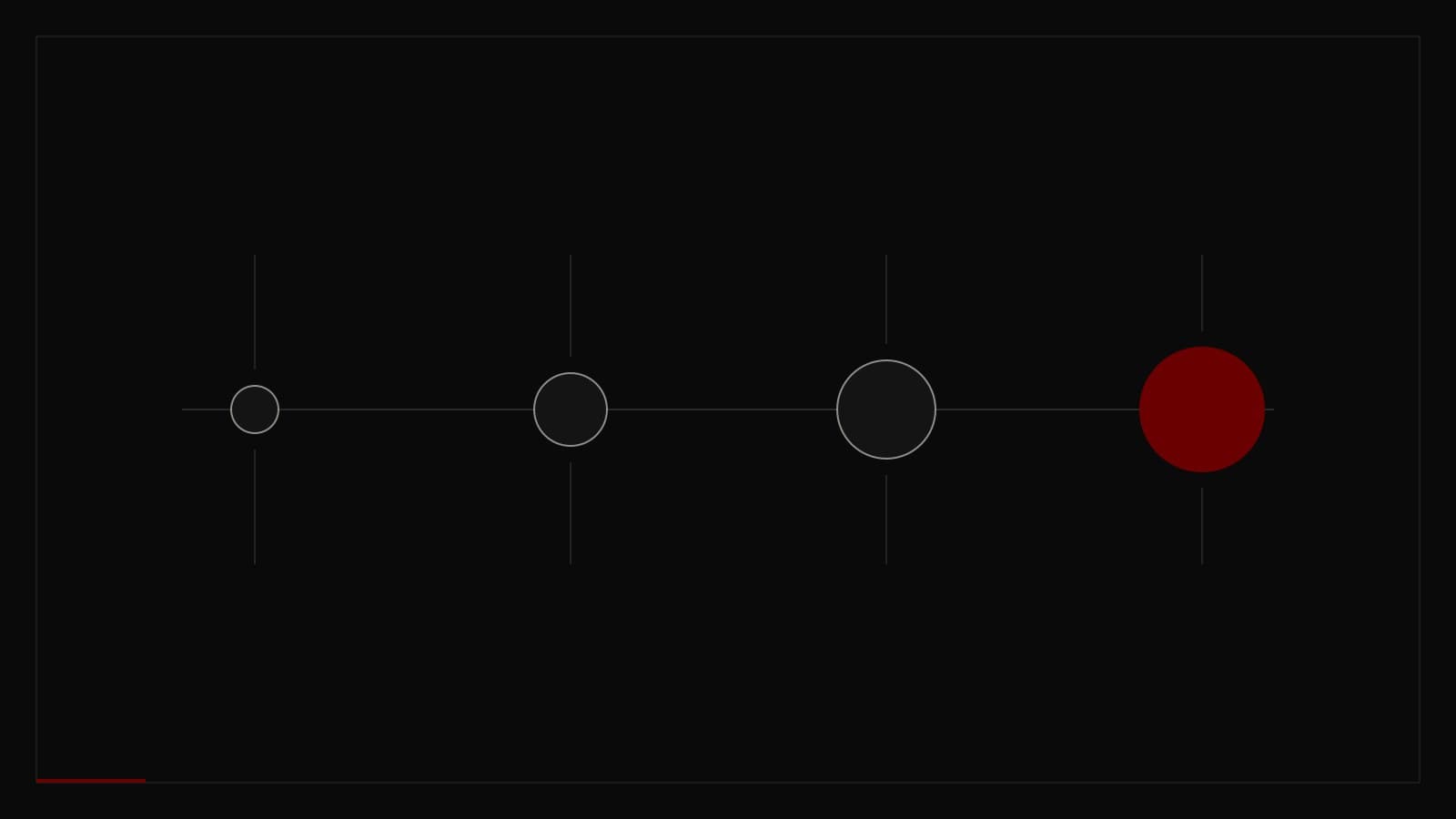
Nobody becomes a customer in a single moment. They arrive at "I'll get in touch" after a series of smaller impressions, a scroll past your Instagram, a glance at your website, a half-remembered ad, a recommendation from a friend. Each of those touchpoints either builds trust or leaks it. The businesses that grow are the ones where every touchpoint pulls in the same direction. The ones that struggle usually have brilliant individual pieces that quietly contradict each other.
This is the idea that sits underneath everything we do as a creative agency in Dublin: a business doesn't need five separate services. It needs one coherent journey, from the first impression a stranger forms of the brand, all the way to the moment they decide to enquire.
The journey most businesses never map
Ask a business owner how a customer finds and chooses them, and you'll often get a shrug: "through Instagram, or Google, or word of mouth, I think." That vagueness is the problem. If you can't describe the journey, you can't design it, and an undesigned journey is one where trust leaks out through gaps nobody's watching.
A useful client journey has four broad stages, and something has to be doing the work at each one.
Stage one: the first impression
Before a customer knows anything about your quality, price, or service, they've already formed an impression from how you look. A single social post, a search result, a photo, this is where a stranger decides, in a fraction of a second, whether you seem like a real, credible business worth a second glance.
This is a brand-system job. Consistent visuals, a clear identity, and a confident tone signal competence before a word is read. Get this wrong and the journey ends before it starts, the customer never even reaches your offer.
Stage two: building trust
If the first impression earns a second look, the next stage is about deepening it. The customer starts paying real attention: browsing your website, watching your videos, reading what you say, checking whether other people trust you.
This is where content and proof do the heavy lifting. Video that shows how you work. A website that answers the real questions. Client results that prove you deliver. Every one of these is a trust deposit. The goal isn't to impress. It's to steadily remove the reasons a reasonable person might hesitate.
Stage three: the decision
Now the customer is genuinely considering you. This is the highest-stakes stage and the one most businesses fumble, because it's where friction quietly kills the sale. An unclear next step, a slow website, a contact form that feels like a chore, a price with no context, any of these can turn an almost-customer back into a stranger.
The job here is to make saying yes easy. One obvious action. A frictionless way to reach you. Proof placed right where the hesitation happens. This is conversion, and it's usually decided by design and clarity, not persuasion.
Stage four: the enquiry, and beyond
The enquiry isn't the finish line; it's a handoff. How fast you respond, how the conversation feels, how consistent your follow-up looks against everything that came before, all of it either confirms the trust you built or undermines it. A slow, off-brand follow-up can lose a customer you'd already won.
The journey, in other words, doesn't end when the form is submitted. It ends when trust is either honoured or broken.
Why the parts have to be one system
Here's the insight that reframes everything: each stage is served by a different discipline, branding, content, web, marketing, but the customer doesn't experience them separately. They experience one continuous impression of your business. If the branding is sharp but the website is clumsy, or the video is excellent but the follow-up is chaotic, the customer feels the seam. And every seam is a place trust escapes.
This is exactly why buying services in isolation so often disappoints. A great logo can't rescue a weak website. A brilliant video can't fix an inconsistent brand. Each piece can be individually good and collectively fail, because they weren't designed to hand the customer smoothly from one stage to the next.
A system fixes that. When strategy, design, content, and distribution are built to work together, the journey becomes seamless, and a seamless journey is what turns attention into enquiries. That's not five services stapled together. It's one growth engine.
How to map your own journey
You can start this today, on paper. Write the four stages across the top: first impression, trust, decision, enquiry. Under each, list what a real customer actually encounters, every touchpoint, honestly. Then ask two questions of each stage: what's doing the work here, and does it look and sound like the same business as the stage before it?
The gaps will reveal themselves. A gorgeous brand feeding a broken website. Strong content pointing to an unclear next step. A great pitch undercut by a slow reply. Each gap is an enquiry you're currently losing, and a place where fixing the system, not just the piece, is what moves the number.
Customers don't reward the best individual asset. They reward the business that makes the whole journey feel effortless. Map it, align it, and treat it as one system, because that's how the first impression actually becomes an enquiry.
Neex Creative is a creative agency in Dublin that designs the whole journey, brand, web, content, and marketing as one system, so more of the right people reach the point of enquiry. If your touchpoints don't feel joined up, let's map your journey.